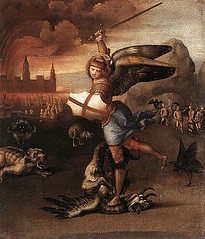
Et nous ferons nôtre ce que Saint François de Sales proclamait dans l’illustre cathédrale Notre-Dame de Paris devant toute la cour royale, à l’occasion de l’oraison funèbre de Philippe-Emmanuel de Lorraine duc de Mercoeur*, le 27 avril 1602 :
« Ah ! que les François sont braves quand ils ont Dieu de leur costé ! qu’ils sont vaillans quand ils sont devots ! qu’ils sont heureux à combattre les Infideles ! Leo qui omnibus insultat animalibus, solos pertimescit gallos, disent les naturalistes. C’est grand cas que la presence de ce capitaine françois ayt peu arrester la course des armes turquesques, et qu’à son aspect leur lune se soit esclipsée. Je m’en resjouys avec vous, ô France ! Et loué soit nostre Dieu, que de vostre arsenal soit sortie une espée si vaillante, et que l’empire soit venu à la queste d’un lieutenant-general à la cour de vostre grand roy, à qui c’est une grande gloire d’estre le plus grand guerrier d’un royaume, duquel sortent des princes qui au reste du monde sont estimés et tenus les premiers. Aussi plusieurs estiment que ce sera un de vos roys, ô France, qui donnera le dernier coup de la ruine à la secte de ce grand imposteur Mahomet. »
Saint François de Sales qui n’était pas français n’avait pas de mal à prêcher cette vérité.
*) « On célébra, l’an 1602, à Paris, où j’étais, les obsèques de ce magnanime prince Philippe-Emmanuel de Lorraine, duc de Mercoeur; lequel avait fait tant de beaux exploits contre les Turcs en Hongrie, que tout le christianisme devait conspirer à l’honneur de sa mémoire .» Saint François de Sales, Oraison funèbre
de Philippe-Emmanuel de Lorraine, Ed. Saint-Remi 2006.
Source: La Voix des Francs - Éditions Saint-Remi
Thursday, October 18, 2012
Ce que Saint François de Sales proclamait 1602


Monday, September 3, 2012
Parla un musulmano convertito a Cristo
Bernardo Cervellera
Facendosi
riprendere da una TV a pieno viso - col rischio di essere riconosciuto e
perseguito per "apostasia" - Mohammed Christophe riafferma il valore
della conversione e del battesimo. Ma diversi vescovi e sacerdoti nei
Paesi a maggioranza islamica rifiutano il battesimo ai musulmani che
vogliono diventare cristiani. Eppure convertirsi significa una
rivoluzione nel rapporto con Dio che è Padre; con Gesù che mi dona la
sua vita; abbandonando tutto a rischio di persecuzione e di morte per
apostasia. 
Roma
(AsiaNews) - Nei giorni scorsi il sito di Notre Dame de Kabylie ha
diffuso un video in cui un ex musulmano, Mohammed Christophe Bilek,
racconta la sua conversione al cristianesimo. Il video è tratto dalla
trasmissione "Dieu merci (Grazie a Dio)", sul tema della "Persecuzione dei cristiani", per la catena televisiva Direct 8.
Mohammed Christophe Bilek è nato in Algeria nel 1950 e vive in
Francia dal 1961. È l'autore di due libri, "Un algerino non troppo
cattolico" (1999, Cerf) e "Sant'Agostino raccontato a mia figlia". Dagli
anni '90 egli è anche il responsabile del sito Notre Dame de Kabylie, per l'evangelizzazione dei musulmani e il dialogo islamo-cristiano.
Il video mette in luce il rischio per i musulmani convertiti di
essere accusati di apostasia e perdere la vita, ma nonostante ciò
l'intervistato ribatte l'importanza del battesimo, dell'incontro con
Gesù Cristo e dell'appartenere alla Chiesa.
La testimonianza di Mohammed Christophe cozza contro le
considerazioni di sacerdoti e vescovi dei Paesi a maggioranza islamici
che, per timore di conseguenze sui convertiti e sulle comunità,
preferiscono rallentare o addirittura escludere il battesimo per i
musulmani che vogliono convertirsi.
Proibito battezzare?
Settimane fa, il vescovo di un Paese del Medio oriente arabo mi
raccontava che una delle sue comunità è stata minacciata di chiusura da
parte della polizia solo perché i fedeli stavano pubblicizzando un
incontro di confronto e dialogo fra cristiani e musulmani. La polizia
temeva che questo fosse il primo passo verso il cosiddetto
"proselitismo" e "l'apostasia". "Se questa è la reazione a un incontro
sul dialogo - concludeva il vescovo con amarezza - figuriamoci quale
sarebbe per una conversione!".
A causa di ciò, e per salvare almeno la libertà di culto che si
garantisce in quel Paese, il vescovo frena ogni conversione e battesimo.
La situazione è ancora più netta in Marocco - e fino a poco tempo fa
in Algeria - dove le diocesi danno chiare indicazioni a non battezzare
alcun musulmano che voglia convertirsi al cattolicesimo. Il motivo è che
"le leggi del Paese lo proibiscono".
P. Samir Khalil racconta che alcuni anni fa ha incontrato un
musulmano che da 13 anni (!) chiedeva di essere battezzato e ciò gli
veniva di continuo rifiutato. I sacerdoti spiegavano che il suo
battesimo avrebbe portato enormi difficoltà a lui - che per evitare la
morte per apostasia avrebbe dovuto emigrare - e al prete che gli avrebbe
amministrato il battesimo. Intanto, il povero musulmano si era studiato
da solo i vangeli e il catechismo, praticando una vita di preghiera.
Anche in Egitto si tende a frenare le conversioni e a non battezzare,
sebbene alcuni sacerdoti mi abbiano confidato di aver amministrato
qualche battesimo in segreto. Interrogato da AsiaNews, un religioso da
decenni in Egitto ha risposto che voler battezzare a tutti i costi è
"contro il Concilio Vaticano II perché il Concilio ha sottolineato la
salvezza dei non cristiani anche al di fuori della Chiesa". La
conclusione sembra essere: non c'è bisogno di battezzare; ognuno si
salva nella condizione in cui è.
Non vale la pena aprire qui un dibattito teologico sulla fede in
Cristo e la salvezza dei non cristiani. Del resto, mi sembra che la Dominus Jesus e il documento della Dottrina della fede sul "proselitismo" ribadiscono l'importanza di un'appartenenza anche "sociale", visibile al Cristo e alla Chiesa.
Mi importa sottolineare il fatto che essere battezzato è qualcosa che
cambia la vita e la percezione della vita del convertito; il
cambiamento avviene ora, nella storia, e non nel futuro di una vita
"eterna" dopo la morte. Per questo, offrire il battesimo a chi lo chiede
non è una questione di superficie, ma un dono di vita e di speranza già
oggi. Non è dunque uguale a zero il bilancio fra essere e non essere
battezzati.
Il Dio "solare" dei cristiani; quello "lunare" del Corano
La fede cambia il presente in modo profondo e significativo. In
un'altra testimonianza riportata su Notre Dame de Kabylie, Mohammed
Christophe, spiegando la sua conversione, sottolinea la sua nuova
comprensione di Dio.
Il convertito si chiede: "Se il Dio del Corano è lo stesso di quello
dei cristiani, perché io, Mohammed, sono divenuto Christophe?" E la
risposta è "Avendo vissuto nell'islam, avendo praticato i suoi precetti,
circondato da persone ancora oggi musulmane (la mia famiglia si
definisce musulmana), io non cesso di essere abbagliato dalla scoperta
del Vangelo. La luce che da esso emana può suggerire un paragone, che
però suppone una premessa: chi vuol discutere del Dio dell'islam deve
riferirsi al Corano. Ed ecco: se si rimpiazza la parola 'Dio' con quella
di 'luce', quella del Corano è una luce lunare, quella del vangelo è
una luce solare....
In effetti che Dio sia unico, creatore, o qualunque altro nome gli si
attribuisca, si può ammetterlo. Ma se ci si ferma a questo postulato,
non è necessario abbandonare l'islam per divenire cristiano. Ma Gesù è
venuto per rivelare agli ebrei e poi a tutti gli uomini che 'Dio è
vostro Padre; Dio vi ama e vi vuole con Lui per donarvi la Sua vita!'. A
questo punto io non esito nemmeno un istante: accetto quest'offerta non
una sola volta, ma anche due! Del resto io so che [l'offerta] che mi fa
il Corano è di meritare forse (perché non c'è garanzia) un paradiso
carnale e materialista (s.38, 50-52), tanto da farmi pensare più a una
pubblicità di qualche luogo di vacanza e di ozio, sotto il sole dei
tropici, ma non mi dà alcuna certezza di 'conoscere' il mio Dio e
Signore!".
Mohammed Christophe fa poi un paragone fra la figura di Cristo e
quella di Maometto: "E che dire del volto di Cristo e quello di
Maometto? Basteranno due citazioni: Gesù (in Giov. 10,11) dice: ' Io
sono il buon pastore; il buon pastore dà la vita per le sue pecore'.
Maometto (in s.33,47): O profeta! Ti è lecito sposare tutte le donne che
hanno la dote; tutte le prigioniere che Dio ha messo nelle tue mani!'.
Siamo seri: una cosa è dire ' Vi è un solo Dio per tutti'; altra cosa è
dire che Egli si interessa a me, verme insignificante, fino a volermi
'divinizzare' in Gesù.... Questa è la rivelazione che mi ha chiamato!".
Gesù, la libertà dell'uomo senza "sottomissione"
Mohammed Christophe si sofferma poi sulle questioni dell'apostasia e sul seguire Cristo fino al rischio della morte:
"[Cristo domanda:] Sei pronto a seguirmi e a lasciare tutto per me?
Quando si è ben compreso ciò che Gesù richiede per amore, si misurano
tutte le difficoltà per rispondere a Lui in modo affermativo. E una cosa
è dirgli 'sì' con le labbra; altra cosa è lasciare tutto per Lui. A noi
che veniamo dall'islam ciò ha per conseguenza di rompere con il proprio
passato, la propria famiglia e comunità, le proprie certezze morali o
spirituali.
Lo so, è molto più semplice rimanere musulmani. Non prendendo alcuna
posizione (Beh, in fondo abbiamo lo stesso Dio), le scuse sono numerose e
facili per non operare questo abbandono, accettare questa
trasformazione, morire a se stesso e seguire Gesù, [in] una conversione
esigente che si compie solo con il suo aiuto. È il passo che il giovane
ricco del Vangelo non ha voluto fare, perché almeno all'inizio, occorre
il proprio libero consenso: Gesù non mi impone di
'sottomettermi'[islam], ma di amarlo in tutta libertà. Ed ecco ancora
una grande differenza: Dio ci crea liberi o schiavi? A seconda della
nostra risposta, Dio non diviene più lo stesso: in un caso io incorro
nella punizione riservata agli apostati o agli empi; nell'altro io sono
il figliol prodigo atteso dal padre, che chiama tutti i servitori non
appena mi vede all'orizzonte. Lasciare l'islam è pericoloso, lo si fa a
rischio della vita. E allora, cari fratelli e sorelle dell'occidente,
accogliete e sostenete quelli che lo fanno....
Insisto: io non parlo del Dio dei musulmani, ma del Dio del Corano. I
musulmani sono miei fratelli e forse domani saranno miei fratelli e
sorelle in Cristo. E dagli anni '90 questa non è solo una speranza, ma
una realtà che mi fa gioire e lodare il Signore: Alleluia! Gesù è venuto
per salvare tutti gli uomini, anche i musulmani!".
Fonte: AsiaNews.it
Le Coran et le Paradis Mahometan
Voyons ce qu'en disait Saint Alphonse-Marie de Liguori, Docteur de L'Eglise du Christ:
Citation:
Du reste, pour connaitre l’impiété de cette loi, il suffit de savoir qu'elle permet à ses
adeptes la vengeance, le vol, et les plaisirs charnels; bien plus, elle ne
fait consister le paradis de la vie eternelle que dans les honteuses
voluptés de la chair.
C'est donc une loi qui convient plutôt à des bêtes qu'à des hommes doués de raison.
http://foicatholique.cultureforum.net/t2091-coran-paradis-mahometan
Saturday, July 7, 2012
Saint Alphonse de Liguori, docteur de l'Église, condamne l'Islam
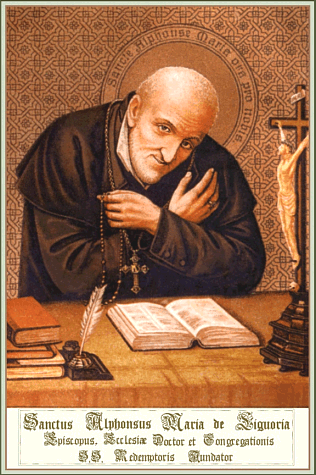
Source: Saint Alphonse et l'Islam, éd. Saint-Remi, p. 18, extrait du Traité Les Vérités de la Foi, Partie III, Chap. XI.
Comparons cela avec le décret de Vatican II Nostra Aetate, qui dit à propos des musulmans:
"L'Église regarde aussi avec estime les musulmans, qui adorent le Dieu unique, vivant et subsistant, miséricordieux et tout-puissant, créateur du ciel et de la terre, qui a parlé aux hommes. Ils cherchent à se soumettre de toute leur âme aux décrets de Dieu, même s'ils sont cachés, comme s'est soumis à Dieu Abraham, auquel la foi islamique se réfère volontiers."
Wikipedia: Alphonse de Liguori
Thursday, December 29, 2011
List of Islamic Terror in Nigeria - starting with most recent (from January 2000 to December 30th, 2009)
July 26 2009 Maidugiri, Yobe, Bauchi, Kano, (Northern Nigeria) Radical Islamic fundamentalist sect, Boko Haram [translated “Western civilization is evil”] goes on rampage burning churches, and looting homes belonging to Christians and murdering them. Three Christian pastors including George Orji (Igbo) were killed by beheading. Officially 800 people were reported killed.
2007, Adamawa (Northern Nigeria) Moslem jihadists invade Christian community of Yugor killing hundreds of Christians, looting and burning churches and Christian’s homes and property.
2006 Maidugiri, (Northern Nigeria) Islamic fundamentalists protesting cartoon of Prophet Mohammed by Danish cartoonist killed hundreds of Christians, burned down scores of Churches, and looted shops and homes belonging to Christians.
2006 All over Northern Nigeria. Similar riots by Islamic jihadists were held in numerous towns in Northern Nigeria – Katsina, Bauchi, Minna, Potiskum, Kano, Kotangora. Thousands of Christians were killed, scores of churches were looted and burned and personal homes and businesses of Christians were looted and burned. One week before that Nigerian MP’s burned Danish and Norwegian flags in the parliament premises.
June 28 2006, Abuja (Northern Nigeria) The Federal government of Nigeria accused Kano State of Northern Nigeria of collaborating with foreign powers to train 100 Muslim militants in “intelligence gathering” and the "practice of jihad". In a news release, Information Minister Frank Nweke said the "Hisbah", a group employed by the mainly Muslim state of Kano to enforce sharia law, was "a parallel security outfit that poses a potential threat to national security".
April 2003, Kano (Northern Nigeria) Islamic jihadists go on a rampage A pastor, Sunday Madumere (Igbo) and six of his family members were killed.
April, 2003, Jos (Northern Nigeria) Armed Muslim insurgents attacked Wereng village near Vom a suburb of Jos killing people, burning homes and looting people’s property.
April, 2003, Langtang (Northern Nigeria) A group of armed Muslims attacked a village in Langtang killing people and burning down homes.
2003 Gusau (Northern Nigeria) Governor Ahmed Sani, who came to the United States and used the VOA to advertise the introduction of fundamentalist Islamic Sharia Law in Nigeria promising that it will never be applied to Christians gave an order that more than 20 of the Christian churches in the State be demolished. They were demolished promptly. No reasons were given.
March, 2003 Jos (Northern Nigeria) Thousands of jihad warriors attacked the town of Kardako in Wase Local Government Area (LGA) shouting “Allahu Akbar” killing Christians and burning down homes.
February, 2003 Ibadan (Western Nigeria) Muslims jihadists from the National Council of Muslim Youth Organizations attacked Christian schools in Ibadan in an effort to force the schools to require women to wear Islamic head coverings. Hundreds of students and teachers were injured in the attack.
December 26, 2002, Bauchi, (Northern Nigeria) Islamic jihadists attacked Christians concluding a Christmas celebration in Bauchi killing Christians, looting and burning churches and Christian’s homes.
December 2002, Jos, (Northern Nigeria). Muslim Jihadists attack Christians. During the attack Rev. Bitrus Manjang, his son, daughter-in- law and their six-month old child were shot to death outside their home. The jihadists went on killing people looting and burning churches and Christian’s homes.
November, 2002 Kano, Kaduna (Northern Nigeria) Muslim jihadists went on a rampage after an article in the This Day newspaper suggested that the prophet Muhammad would probably have married a contestant from the Miss World pageant scheduled to be held in Abuja. Muslim mobs ransacked the newspaper’s office, issued a fatwa on the author of the article, Miss Isioma, killed Christians and burned down numerous churches.
October 2002, Jos, (Northern Nigeria) Hundreds of Christians were killed when a mob of several Muslims jihadists attacked the town of Fajul in Plateau State. Mercenaries from Chad and Niger were believed to be among the group, which burned down homes, churches, and raped several women.
September 11, 2002, Jos, (Northern Nigeria) A bomb exploded at the Church of Christ in the Laranto suburb of Jos. No one was injured, but there was some structural damage to the church building.
August 2002 Kano, (Northern Nigeria) The government of Kano State ordered half of the churches in Kano State closed because of Muslim complaints about “too many churches.”
June 2002, Jos, (Northern Nigeria) Several Christian communities in Plateau state including Yelwa, Shendam, Wase, Barakin Ladi, Vom and Miango were invaded by Islamic jihadists who killed people and burned down homes and churches.
June, 2002, Minna, (Northern Nigeria) At least 75 Christians were arrested in Niger state for opposing the state’s Islamic sharia law.
April 8-22, 2002, Kano (Northern Nigeria) At least seven churches in Kano State were destroyed by authorities. There is a growing trend in states that have enacted Sharia law to destroy Christian churches on the pretense that the churches have violated building codes. Christians believe it is a step toward wiping out the Christian faith in northern Nigeria.
April 2002, Sokoto (Northern Nigeria) Two Christians in Zamfara State were tried on the charge of apostasy, converting from Islam to Christianity. According to Islamic law, the penalty for apostasy is death. However the two Christians, Lawali Yakubu and Ali Jafaru, claim they were never Muslims to start with. The two belong to an ethnic group that has practiced Christianity for many years.
February, 2002 Ilorin (Northern Nigeria) Muslims in Ilorin turned violent while celebrating Eid-el-Kabir and began attacking and killing Christians and burning their houses and businesses.
February 2002, Kano (Northern Nigeria) The Kano state government revealed that it had closed down 122 Christian schools for failing to meet state requirements. The requirement in question is the compulsory study of Islam. Christian schools have refused to allow Muslim clerics into their schools, thus risking closure.
February, 2002, Gombe, (Northern Nigeria) A Christian lady, Esther Bulus was kidnapped from her school by four Muslims who slit her throat and left her to die. Esther had refused to marry a Muslim politician in Gombe on grounds of religious differences. She was murdered because of this.
December 30, 2001, Jos, (Northern Nigeria) Armed Muslim jihadists attacked the Christian community in southern Jos, killing people, looting and destroying property worth several million dollars.
December 2001, Yola (Northern Nigeria) Muslim army soldiers from the 23rd Armored 7th Brigade in Yola, burned a Christian church building, which was constructed in the army barracks. They justified the act by saying it was an illegal structure. However, the army officially allows both Islam and Christianity to be practiced in the barracks.
December 10, 2001, Kano, (Northern Nigeria) Truck driver Uche Nwama was killed by Islamic jihadists for allowing the exhaust from his truck to drift into an open-air Islamic meeting. Islamic jihadists claimed the exhaust had desecrated the Quran.
November 6 2001; Ibadan (Western Nigeria) Islamic jihadists hold a massive rally in Ibadan in support of Osama Bin Laden and his attack and slaughter of thousands of Americans during the 9/11/2001 terrorist attack on the World Trade Center in New York. They condemn the United States for attacking the Taliban in Afghanistan and vow to fight alongside Bin Laden and his fellow terrorists.
November 2001 (Northern and Western Nigeria) Islamic jihadists hold massive rallies in Osogbo, Sokoto, Kano, Zaria, Kaduna, and other towns in Western and Northern Nigeria in support of Osama Bin Laden and his attack and slaughter of thousands of Americans during 9/11/2001 terrorist attack on the World Trade Center in New York. They condemn the United States for attacking the Taliban in Afghanistan. They also vow to fight alongside Bin Laden and his fellow terrorists in a jihad against America.
November 28, 2001 Enugu (Eastern Nigeria) Christian Biafrans organize a peaceful rally in Enugu in solidarity with and support of the government and people of the United States over the terrorist attack in New York on 9/11/2001 and in support of the United States action against the terrorists. The Nigerian paramilitary police brutalized the participants, disbanded the rally and arrested the leaders.
October 14-18, 2001 Kano (Northern Nigeria) Massive anti-American protests in Kano by Islamic jihadists. Thousands of Christians are slaughtered and scores of churches are burned. Property of Christians worth billions of dollars are looted and destroyed.
October 2001, Kaduna (Northern Nigeria) Islamic jihadists attack Christians in churches, on the street and in their homes. Thousands of Christians are slaughtered, scores of churches are burned and looted, and thousands of Christian homes are looted, and burned.
September 2001, Kano (Northern Nigeria) Islamic jihadists attack Christians burning down churches slaughtering thousands of people, looting churches and private homes. Kano State government demolishes the few remaining churches.
September 2001, Jos (Northern Nigeria) In a well planned and highly coordinated program Islamic jihadists attack Christians in the city of Jos, burning down churches, and private homes of Christians, looting the churches and private property of Christians. Hundreds of churches were burned and thousands of Christians were slaughtered some burned while worshipping in their churches.
August 2001, Bauchi, (Northern Nigeria). The Bauchi state government is alleged to be using Muslim mercenaries to attack Christians in the Tafawa Balewa and Bogora districts. On several occasions vehicles loaded with Islamic jihadists were intercepted by vigilant Christians. Several hundred Christians were killed and houses, shops and churches looted, burned and destroyed.
June 2001, Gawaram (Northern Nigeria) Islamic jihadists attack Christians, burn down dozens of churches and kill Christians.
February 24-25, 2001, (Gombe) A visit to Gombe state by an Israeli ambassador sparked a riot by Islamic jihadists. During the riot the jihadists kill Christians, loot and burn down churches, loot and burn down Christian homes and render thousands of people homeless. The Calvary Baptist Church and the Bishara Baptist church are among those looted and burned.
September 2000 Gombe (Northern Nigeria) In Bambam, Gombe state Islamic jihadists attack and kill Christians, burn down and loot churches and private homes and businesses of Christians.
May 2000, Kaduna (Northern Nigeria) For several days Islamic jihadists attack and slaughter hundreds of people in Kaduna.. They loot thousands of Christian people’s homes, churches, businesses and then burn them down. Thousands of Christians are mindlessly slaughtered and more than 200 churches are burned.
February 2000, Kaduna (Northern Nigeria) Islamic jihadists attack and slaughter Christians opposing the implementation of Sharia law in Kaduna, northern Nigeria. Christian homes, businesses and churches are looted, and burned. Thousands of Christians are mercilessly slaughtered and property worth billions of dollars are looted and destroyed by the jihadists.
2000 Damboa, Maidugiri, (Northern Nigeria) Islamic jihadists attack and slaughter Christians, loot and burn Christian homes, businesses and churches.
Saturday, May 28, 2011
Sunday, April 24, 2011
Santiago Matamoros - the Moor (Muslim) slayer
 The finding of the sacred remains of St. James, the Son of Thunder, by Bishop Teodomirus signalled the general call to war against the Moorish (Islamic) invaders, who had by then the control of the greatest part of the Peninsula, the Northwest excepted, and had even entered into France, menacing the rest of Christendom. A small militia under King Don Pelayo had already repelled the invaders at the battle of Covadonga, in 718, starting the Reconquista of Spain.
It was at Clavijo, in 845, that the forces of King Ramiro I defeated the far superior army of Abderraman II. The galvanizing cry of the Christian soldiers was ¡Santiago y cierra España!, "For St. James, and close ranks, Spain!" The General Chronicle of King Alfonso X the Wise reports a miraculous event during the battle of Clavijo, which gave the cult of St. James a dramatic configuration. According to witnesses, Santiago was seen descending from the sky mounted on a white horse, having in one hand a snow-white banner on which was displayed a blood red cross, and in the other a sword, en un cavallo blanco con una senya blanca et grand espada reluzient en la mano. We may interpret this intervention of St. James as a precise fact or as a poetic licence; what matters is the undeniable fact of the miraculous protection of the Son of Thunder, who will become from this time on the Patron of Spain. The imagery will present him thereafter as a knight on a white horse, carrying a banner with the Cross of Santiago and wielding a flashing sword. Protector of Christendom, he became Santiago Matamoros, the Moor slayer. And the Mozarabic Office salutes him from then on as Defensor Almae Hispaniae, Jacobe, vindex hostium, "James, defender of the soul of Spain, punisher of its enemies."
If Islam was able to subjugate the Visigothic monarchy with the help of the Prophet Mohammed, the small Christian troops will counterattack with the assistance of St. James. As Américo Castro put it, Cruzadas versus Alcoranadas, or the Cross against the Koran.
The vocation of the Son of Thunder for combat against the infidels manifested itself in countless occasions during the Reconquista and every war in defence of Holy Religion, up to our days. Caudillo de Cruzados, "commander of crusaders," he was invoked by the soldiers fighting the Reds during the Spanish civil war (1936-1939) and especially during the decisive battle of the river Ebro. Generalissimo Francisco Franco went as far as stating: "If one wants to get rid of Spain, take away Santiago."
Santiago Matamoros, in the words of Félix Sardá y Salvany, the great Catalan anti-Liberal apologist, "is the most perfect and adequate representation of the faith of our people; the faith of Spain is indeed a militant faith; this is what has characterized us always an even nowadays; this is what makes incomprehensible to foreigners the major part of our history’s pages, as well as the attitudes and events of today’s Spain. One must understand that we are and want to remain heirs and disciples of an armed apostle and of a Santiago fighting bloody battles on horseback: this is the key to decipher the enigma of our apparently strange national character."
Indeed, the Catholic history of Spain is founded upon the blood of countless martyrs, from the early disciples of Santiago until those who in the tragic and glorious epopee of 1936-1939 died with a smile, forgiving their assassins and crying ¡Viva Cristo Rey!
The restoration of Christendom requires, today as ever, a militant approach to every facet of life, and Santiago is perhaps our best model. Una manu sua faciebat opus et altera tenebat gladium. Work and combat, under Mary’s protection; we should make ours these two lessons of Santiago: constant work and militant attitude in order to defend the principles of Catholic civilization.
See: Rorate Caeli - Blog
See also:
Friday, February 4, 2011
Santo subito! Per chi? Per i cattolici o per i maomettani?
Grandezze” (islamiche) di Giovanni Paolo II
Pubblichiamo in calce a questa brevissima nota introduttiva due perle dell’indimenticabile (e come potremmo mai dimenticarcene?) Giovanni Paolo II, del quale è stato scritto, da una penna assolutamente insospettabile di simpatie tradizionaliste come quella di Ida Magli su l’Indipendente, che “mai un Papa ha fatto tanto male alla Chiesa”.
E, in effetti… il 5 maggio 2001, ricorrenza napoleonica, G.P. II atterrava a Damasco, per venerare la tomba del Battista nella locale moschea e incontrare il Presidente siriano Bashar-al-Assad, le cui mani grondano del sangue dei cristiani libanesi; sorvoliamo sul fatto che l’insigne reliquia della testa di San Giovanni Battista è custodita a Roma, nella chiesa di San Silvestro.
Il giorno dopo, il 6 maggio, parlando ai càpataz mediorientali della locale comunità islamica, Woytjla le spara subito grosse. Uniamo queste dichiarazioni del 2001 a quelle, ancora più clamorose, che G.P. II aveva pronunciato il 9 maggio 1985, ai partecipanti al colloquio sul tema «La santità nel Cristianesimo e nell'Islam», tenutosi nell’ex città eterna e, ancor più, ex città santa della Cristianità. Pubblichiamo entrambe le dichiarazioni woytjliane in fondo a queste nostre osservazioni.
Si sa che il Dio dei cristiani è Sancta Trinitas, unus Deus e dunque Padre, Figlio e Spirito Santo; è parimenti noto che i musulmani non riconoscono come Dio né lo Spirito Santo, né il Figlio cioè Gesù Cristo e dunque che essi non abbiano per Dio neppure il Padre, giacché, come dice il Vangelo, “chiunque nega il Figlio, non possiede nemmeno il Padre e chi professa la sua fede nel Figlio possiede anche il Padre” (Gv. 2, 23). Se ne deduce che cristiani cattolici da un lato e musulmani dall’altro non hanno in comune lo stesso Dio, puramente e semplicemente non hanno in comune Dio. Sicché, si deve dirlo chiaramente, la setta maomettana adora un demone, secondo l’assunto del Salmo 95, 5 che recita testualmente: “Omnes dii gentium, daemonia” e cioè che, al di fuori del vero Dio e della vera religione, “tutti gli dei delle genti sono demoni”.
Che dice invece l’impagabile Woytjla nel 2001 e nel 1985? Egli dichiara che, nei loro luoghi di preghiera, cristiani e maomettani “incontrano il Dio misericordioso” (quale Dio?); che debbono portare rispetto per le preghiere (vere o false, dirette a Dio o al diavolo non importa) gli uni degli altri; riconosce che c’è una santità anche nell’Islam e, dunque, che la santità autentica non è unicamente quella cattolica, dunque che ci si può santificare anche in una religione falsa e demoniaca come quella musulmana; che il Dio trinitario dei cattolici e il dio degl’islamici è lo stesso (“Come spesso ho detto in altri incontri con i musulmani, il vostro Dio e il nostro è uno solo e lo stesso”, così nel 1985); che il Corano è un libro sacro (“il vostro sacro Corano”, afferma testualmente); che esso chiama alla rettitudine, alla bontà e alla virtù. Come le cronache riferiscono allorché ci parlano ogni giorno di uccisioni di miscredenti, attentati, barbarie, poligamia, schiavitù ecc. all’ombra e sotto l’egida della mezzaluna e col permesso, anzi con l’esplicito incitamento da parte delle varie sure craniche.
Una simile professione di relativismo religioso e d’indifferentismo, che postula tutte le religioni essere uguali o comunque ordinate alla salvezza, contrariamente agli assunti del tradizionale e perenne Magistero cattolico, rende ragione del perché il mondo anticristiano abbia acclamato Giovanni Paolo II (non solo da morto) ma già quand’era in vita, come i sodomiti spagnoli hanno fatto provocatoriamente con Zapatero, Santo subito!
Santo subito? “Ma mi faccia il piacere!”, direbbe Totò.

Source: Traditio.it
Les croisades
Partis répandre la foi de Mahomet, les Arabes s'emparent de Jérusalem en 638. Réduits à la condition de dhimmi, les chrétiens du Moyen-Orient sont autorisés à pratiquer leur religion, mais astreints au port de signes distinctifs et au paiement d'un impôt spécial. Construire de nouvelles églises leur est interdit, ce qui, à terme, les condamne. Les pèlerinages européens peuvent continuer (pour les chrétiens du Moyen Age, le pèlerinage est une dévotion essentielle), mais à condition de payer un tribut. En 800, les califes abbassides, qui ont Bagdad pour capitale, reconnaissent à Charlemagne la tutelle morale sur les Lieux saints. Toutefois, au début du XIe siècle, la situation s'aggrave. Pour conserver leur poste, les chrétiens employés par le califat doivent se convertir à l'islam. En 1009, le calife El-Hakim persécute les non-musulmans. En 1078, les Turcs seldjoukides prennent Jérusalem. Dès lors, les pèlerinages deviennent si dangereux qu'ils finissent par s'interrompre.
Au VIIe siècle, les musulmans ont conquis la Palestine et la Syrie ; au VIIIe siècle, ils ont envahi l'Afrique du Nord en y détruisant une chrétienté dont saint Augustin avait jadis été la gloire, puis ils ont occupé l'Espagne et le Portugal ; au IXe siècle, ils ont conquis la Sicile. En ce XIe siècle, Constantinople fait face au péril turc. En 1054, un schisme a séparé l'Eglise d'Orient de l'Eglise de Rome, mais les différends théologiques n'empêchent pas les deux pôles du monde chrétien de se parler. Contre la pression turque, en 1073, l'empereur byzantin Michel VII appelle au secours le pape Grégoire VII, demande renouvelée par Alexis Ier Comnène à l'adresse d'Urbain II en 1095. En Espagne, la Reconquête chrétienne a commencé dès 1030. Tolède a été repris aux Maures en 1085 mais, l'année suivante, les Almoravides, venus du Maroc, ont lancé une nouvelle offensive. A l'incitation du pape, des chevaliers français se sont engagés dans les armées d'Aragon, de Castille et du Portugal. En Sicile, les Normands ont débarqué en 1040, ont chassé les Arabes au terme d'une guerre de trente ans.

Les croisades devraient être comprises comme le moyen le plus sûr de vaincre la religion du "faux prophète" et de cesser son expansion. Et ce jusqu'au XVIIIème siècle. Châteaubriand affirmait dans ses Mémoires d'outre-tombe : "... Les croisades ne furent des folies, comme on affectait de les appeler, ni dans leur principe, ni dans leur résultat. (...) Les croisades, en affaiblissant les hordes mahométanes au centre même de l'Asie, nous ont empêchés de devenir la proie des Turcs et des Arabes..."
St. Thomas Aquinas' Teaching Against the Infidel Mohammed

He did not bring forth any signs produced in a supernatural way, which alone fittingly gives witness to divine inspiration; for a visible action that can be only divine reveals an invisibly inspired teacher of truth. On the Contrary, Mohammed said that he was sent in the power of his arms - which are signs not lacking even to robbers and tyrants. What is more, no wise men, men trained in things divine and human, believed in him from the beginning (1). Those who believed in him were brutal men and desert wanderers, utterly ignorant of all divine teaching, through whose numbers Mohammed forced others to become his follower's by the violence of his arms. Nor do divine pronouncements on part of preceding prophets offer him any witness. On the contrary, he perverts almost all the testimony of the Old and the New Testaments by making them into a fabrication of his own, as can be seen by anyone who examines his law. It was, therefore, a shrewd decision on his part to forbid his followers to read the Old and New Testaments, lest these books convict him of falsity. It is thus clear that those who place faith in his words believe foolishly." - Summa Contra Gentiles, Book 1, Chapter 16, Art. 4. Footnote: 1. Sura 21:5, Sura 44:14; Sura 16:103, Sura 37:36
Source: http://www.opusdeialert.com/st-thomas-aquinas-against-mohammed.htm
Saturday, October 30, 2010
L'ecumenismo uccide la carità: maomettani confermati nell'errore
 di Elsa Franscini. - Quando si dice “perseverare è diabolico”. Per il terzo anno l'oratorio di Arnate, frazione di Gallarate (Va) viene messo a disposizione dei maomettani per il loro ramadan. Si tratta di un periodo di astinenza per modo di dire: per un mese gli islamici potranno mangiare, bere, divertirsi e fare sesso ma solo di notte. Di giorno dovranno dedicarsi anche alla preghiera e il parroco di Arnate, don Adriano Colombo, col placet del prevosto di Gallarate, mons. Franco Carnevali, si è prodigato, come già avviene da due anni, per ospitare i maomettani.
DEBOLEZZA. Gli eterni nemici della Cristianità, nonchè negatori della divinità di Cristo, avranno modo una volta di più di disprezzare questa debolezza che per loro è soltanto il frutto della “poca fede dei cristiani” nel loro credo. Così, in nome del falso ecumenismo che uccide la carità, verranno confermati nel loro errore, cioè incancreniti nel rifiuto di riconoscere la divinità di Colui che ha detto: "Io sono la via, la verità e la vita: non si va al Padre se non tramite me". E ai suoi: "Andate, battezzate e insegnate il Vangelo: chi crederà e sarà battezzato sarà salvo, ma chi non crederà sarà condannato" (Marco 16,16). Le autorità locali, dal canto loro, vedranno vanificata la loro azione politica che, nel 2005, portò alla chiusura di uno stabile adibito a moschea.
PREOCCUPAZIONE. Quanto alla brava gente, in tanti si dicono scandalizzati e turbati da queste scelte fuorvianti, che finiscono con il porre sullo stesso piano la religione di Dio e quelle degli uomini, a cui si aggiunge poi una certa preoccupazione: “Tireremo un respiro di sollievo solo tra un mese, quando tutto ciò sarà finito”, spiega un professionista della zona. E qualcuno ricorda come si espresse il compianto vescovo di Como, mons. Alessandro Maggiolini, a proposito di quei padri somaschi che concessero ai maomettani la palestra del loro istituto scolastico per pregare: “Sono stati dei tonti – disse Maggiolini -. E coi reprobi si può anche discutere, ma coi tonti proprio no”.
http://www.ecclesiacatholica.it/ - 11 agosto 2010
Last Updated ( Saturday, 14 August 2010 17:44 )